On April 23, 2026, a smaller XRP-denominated account managed separately from the main Terramatris strategies initiated a structured crypto options income strategy on Bybit.
The account holder approved the strategy specifically to generate additional income from long-term XRP holdings without liquidating the underlying XRP position.
At the time, the account held 751 XRP valued at approximately $1,000, while ETH traded near $2,321.
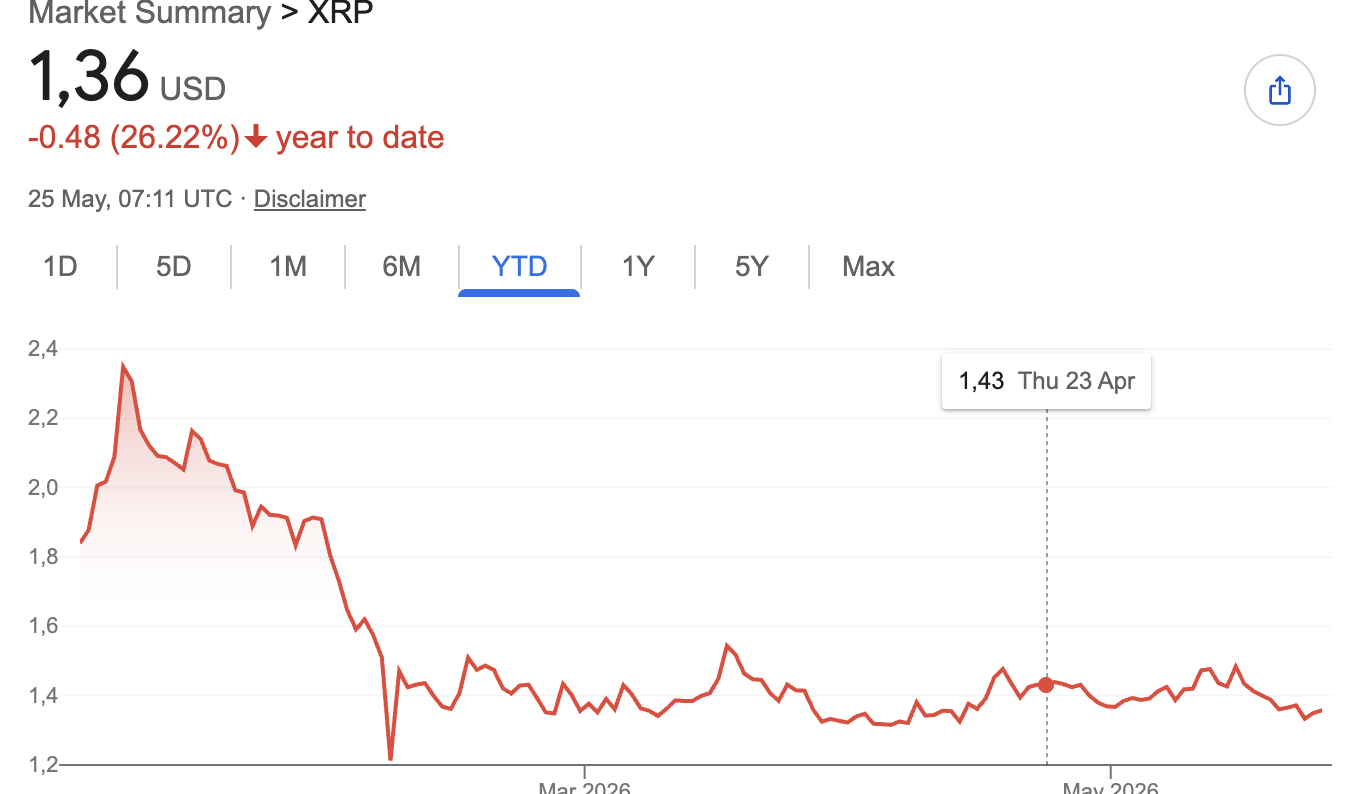
Instead of selling XRP, the strategy used XRP as collateral for selling ETH put options.
The initial exposure size was approximately equivalent to 1 ETH, meaning the structure carried leverage exceeding 2x relative to collateral value.
This was intentionally aggressive.
But from the beginning, the plan was never simply to “hold and hope.”
The strategy depended on active management, aggressive adjustments, and continuous exposure reduction if market conditions deteriorated.
Why We Stopped Selling XRP Options Directly
Before developing this structure, Terramatris previously experimented with monthly XRP option selling.
Over time, however, several structural issues became increasingly clear:
- XRP options liquidity remained relatively weak,
- spreads were often inefficient,
- strike availability was limited,
- and rolling positions during volatile periods became difficult.
ETH options markets on Bybit offered substantially better liquidity and flexibility.
As a result, we developed an alternative structure:
- maintain long-term XRP exposure,
- use XRP as collateral,
- and generate premium income through ETH put selling instead.
This allowed the account to benefit from deeper options liquidity while continuing to hold XRP long term.
The Hidden Risk: Dual-Asset Tail Exposure
Importantly, the structure carried significantly more risk than a traditional cash-secured put strategy.
The primary risk was not only ETH declining.
The account also faced collateral risk from XRP itself.
Because XRP was used as collateral, a severe crypto-wide selloff could damage both sides of the structure simultaneously:
- ETH declining would increase put assignment risk,
- while XRP declining would weaken collateral value.
This type of correlated collateral exposure is one of the largest hidden risks in crypto derivatives trading.
In extreme market conditions, both:
- liabilities,
- and collateral,
can deteriorate simultaneously.
This meant the strategy depended heavily on:
- active position management,
- disciplined rolling,
- conservative delta selection,
- and continuous exposure reduction.
Without adjustments, this type of structure could become dangerous quickly during volatility expansion.
Initial Position Structure
The original strategy focused on selling weekly ETH put options with deltas generally between -0.10 and -0.15.
This approach targeted lower-probability assignment scenarios while generating moderate recurring premium income.
For several weeks, the structure performed smoothly.
Weekly options expired worthless while premium accumulated consistently.
However, the strategy was always designed around the assumption that market conditions would eventually change.
And they did.
First Major Adjustment: ETH Drops Toward $2,090
In the middle of May, ETH experienced a sharp decline and traded near $2,090.
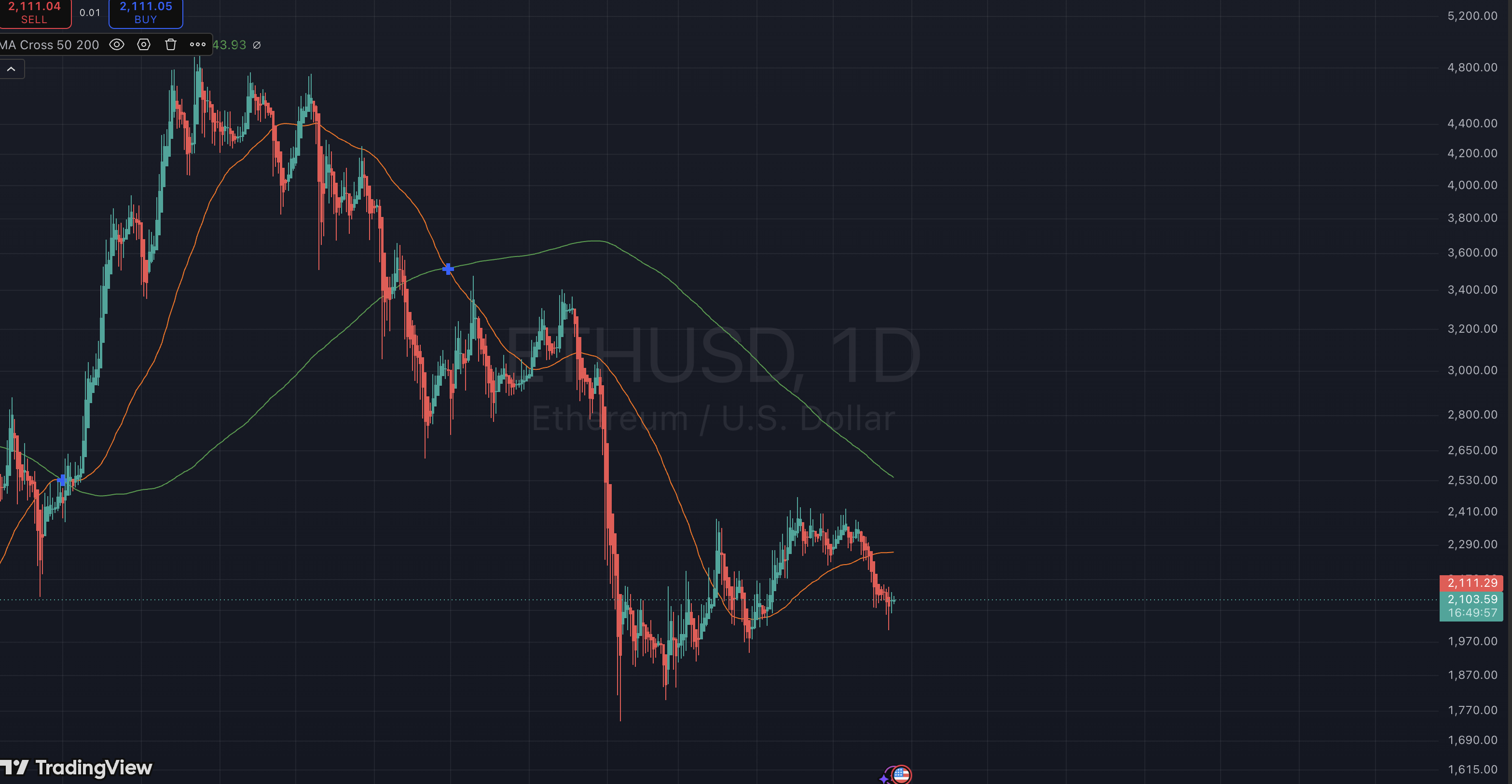
Although the short put strikes themselves were not immediately threatened, Terramatris chose to reduce exposure proactively instead of maintaining the original structure.
The account rolled the position:
- forward toward June expiry,
- down toward lower strikes near $1,900,
- while simultaneously reducing effective exposure from 1 ETH to 0.5 ETH.
Importantly, this adjustment still generated additional premium income.
At this stage:
- total exposure decreased substantially,
- collateralization improved materially,
- and overall survivability of the structure increased significantly.
The account still carried correlated XRP collateral risk, but the overall leverage profile became much healthier than at inception.
Second Adjustment: ETH Trades Near $2,020
ETH later continued trading around the low-$2,000 range and briefly approached $2,020.
Once again, the strategy prioritized flexibility over conviction.
Rather than defending the original exposure size emotionally, the account adjusted again.
This time the position was:
- rolled forward toward September expiry,
- strikes were lowered again toward $1,800,
- and effective exposure was reduced from 0.5 ETH to just 0.2 ETH.
Compared to the original April structure, total ETH exposure had now been reduced by approximately 80%.
Or viewed differently:
overall exposure risk was reduced roughly 5 times.
Meanwhile, cumulative collected option premium reached $49.66.
Performance Metrics
Between April 23 and September 25:
- Total collected premium: $49.66
- Return generated: approximately 14.61%
- Annualized equivalent return: approximately 34.2%
- Exposure reduction: from 1 ETH to 0.2 ETH
- Risk reduction: approximately 5x lower than the original structure
While the premium generation itself was solid, the more important outcome was the gradual reduction of risk exposure over time.
The strategy evolved from a relatively aggressive leveraged structure into a significantly smaller and more defensive position.
Key Lessons From the Trade
1. Liquidity Matters More Than Many Traders Realize
ETH options markets provided significantly better execution and rolling flexibility than XRP options markets.
This became extremely important during volatile periods.
2. Correlated Collateral Risk Is Real
Using volatile crypto assets as collateral creates risks many traders underestimate.
A simultaneous decline in both collateral and underlying exposure can destabilize leveraged structures very quickly.
3. Early Adjustments Matter
The strategy was adjusted before the position became dangerous.
This dramatically improved long-term survivability.
4. Exposure Reduction Can Matter More Than Yield
Many traders focus exclusively on maximizing premium income.
Terramatris prioritized reducing downside exposure while still maintaining positive premium generation.
Over time, this often becomes more important than maximizing short-term returns.
The Trade Is Still Ongoing
Importantly, this trade has not been closed yet.
As of now, the position remains active with September expiry approaching.
The current structure is substantially smaller than the original setup, with effective exposure reduced from approximately 1 ETH to 0.2 ETH. However, the strategy still requires ongoing monitoring and active management.
As expiration approaches, Terramatris will likely evaluate several possible outcomes depending on market conditions at the time:
- allowing the options to expire worthless,
- rolling the position forward again,
- lowering strikes further if needed,
- or reducing exposure even more.
The decision will depend primarily on:
- ETH price behavior,
- XRP collateral stability,
- implied volatility conditions,
- and overall market liquidity.
This is an important point because options management is rarely static.
In practice, many successful options strategies evolve continuously over time rather than ending at a predefined date. Especially in crypto markets, maintaining flexibility can be more important than trying to predict exact price movements months in advance.
Even though overall exposure has already been reduced significantly, the account still carries residual tail risk due to the combination of:
- ETH downside exposure,
- XRP collateral volatility,
- and broader crypto market correlation risk.
For this reason, the strategy continues to prioritize defensive positioning and adaptability over maximizing short-term premium income.
Final Thoughts
This strategy was never intended to be a high-risk yield farm.
It was designed as a structured approach for generating additional income from long-term XRP holdings while actively reducing exposure during changing market conditions.
Over 156 days, the account:
- generated recurring premium income,
- reduced ETH exposure by approximately 80%,
- improved collateral efficiency,
- and materially lowered tail risk compared to the original structure.
The trade still carried substantial risk throughout its lifecycle, particularly due to correlated crypto collateral exposure.
But disciplined adjustments, conservative strike management, and active rolling allowed the structure to improve progressively over time instead of becoming more fragile.
In crypto derivatives trading, adaptability often matters more than prediction.
Risk Disclosure
This article is provided for educational and informational purposes only and does not constitute investment advice, financial advice, or a recommendation to buy or sell any financial instrument.
Options trading involves substantial risk, including the potential loss of capital. Cryptocurrency markets are highly volatile and may not be suitable for all investors.
Using volatile crypto assets as collateral for leveraged derivatives strategies introduces additional correlated market risks that can amplify losses during periods of market stress.
Past performance does not guarantee future results.
Terramatris and associated accounts may hold positions in the assets discussed at the time of publication.